
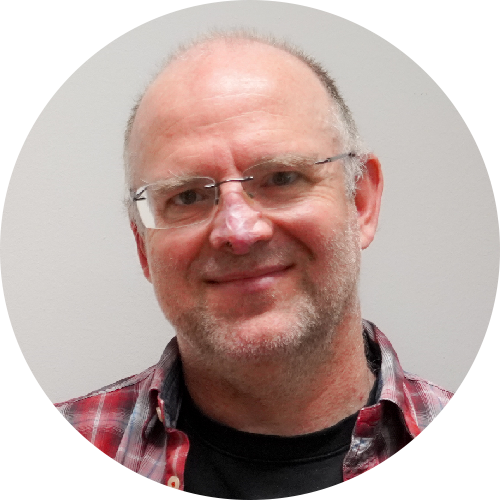
What can digital technologies tell us about cultural heritage in Austria? Markus Seidl is exploring this question in collaboration with archaeologists, musicologists, and art historians in Vienna and Lower Austria. His research focuses on what is known as computer vision:
Welcome to the ECCC Showcase. Here, experts offer insights into research, teaching, and knowledge transfer at the intersection of culture, creativity, and technology. We speak with colleagues from the USTP and partners from the cultural and creative industries about how technological developments shape our everyday lives, the role of culture in a digital society, and why interdisciplinary dialogue is more important than ever.
SHOWCASING:
Computer Vision and Art History — Markus Seidl
Copyright: Florian Lackner
When I reach into my pants pocket with my hand, I immediately notice: there’s a lighter or a set of keys in there. That’s the tactile stimuli from my fingers that have been transmitted to my brain, where the pattern is interpreted. That’s pattern recognition.
Computer vision is a subfield of artificial intelligence that analyzes visual data and recognizes patterns. Markus Seidl is a program director at USTP and has been conducting research years at the intersection of computer science, media art, and computer vision for many years.
You can learn more about Markus Seidl and his research on computer vision and art history in our new ECCC podcast.
Explore # Culture & Creativity Projects at USTP
PEUAFLEU – Analysis of Fleuronnee
Investigating book illustrations with machine learning.
GöttwAIg – Wunderkammer(21). Barock digital
A digital Wunderkammer (cabinet of curiosities) as an immersive space of experience.
AniVision
Animation in Ephemeral Films from Austria, East & West Germany between 1945 and 1989: A Combined Film Analysis and Computer Vision Approach
Visual Heritage
Visual Analytics and Computer Vision Meet Cultural Heritage.
HIINT- Hidden Intermediaries on YouTube
Invisible Actors of Cultural Production on Digital Platforms.